
Appearing on a podcast, Guillaume Fourrier discusses his career, his officially recognised fishing records and the techniques he uses to target exceptional fish. During this 33-minute interview, the Dieppe-based fishing guide also reveals what goes on behind the scenes of his business, introduces his fully equipped boat and shares some unforgettable fishing experiences with his clients.
This interview explores how Guillaume became a professional fishing guide after a career in the fishing tackle industry. He also explains what it takes to target trophy fish and prepare for a successful day at sea.
Published in 2026, this Fishercast interview offers a fascinating insight into Guillaume Fourrier’s world. Illustrated with numerous photographs of record-breaking catches and footage of offshore fishing, the conversation explores several decades of dedication to sport fishing, from his earliest experiences to his current career as a professional sea fishing guide. Throughout the interview, Guillaume explains his philosophy: prioritising the quality of catches over quantity, understanding fish behaviour and making the most of modern technology to improve fishing results. His approach combines careful observation, extensive experience and meticulous preparation before every trip.
From a lifelong passion to a professional fishing career
Passionate about fishing since the age of 13, Guillaume Fourrier gradually built his professional career around the sport. The numerous fishing magazine covers shown throughout the interview reflect his lifelong passion for fishing.
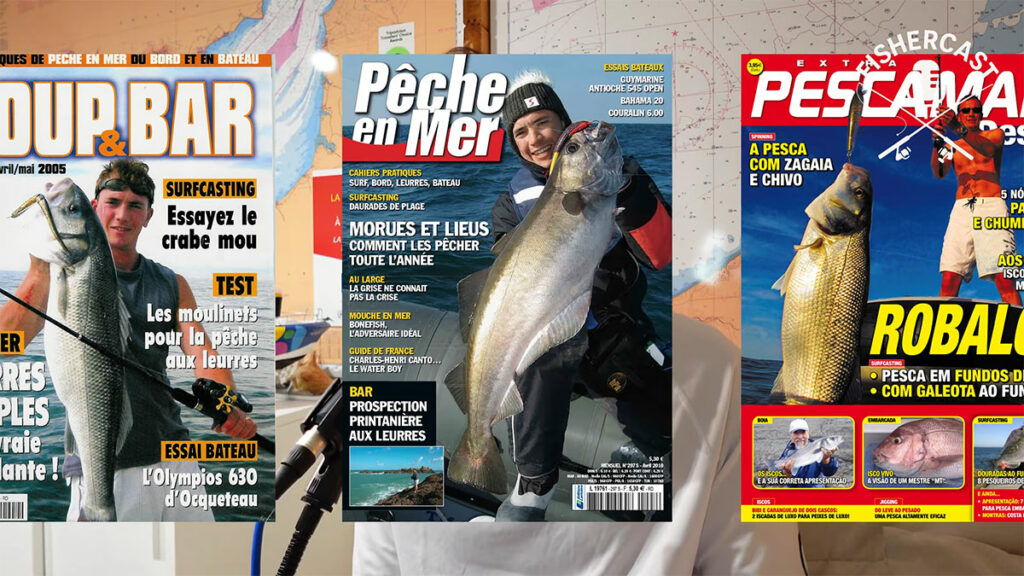
After working in product development within the fishing tackle industry and spending nine years in marketing for a major fishing equipment brand, he decided to take a different direction. Following the Covid pandemic, he finally turned a long-standing ambition into reality by becoming a professional sea fishing guide. This career change now allows him to spend his working days on the water, sharing his knowledge with anglers of all abilities.
However, turning a passion into a profession involves much more than simply spending more time fishing. During the interview, Guillaume discusses the challenges of building a financially sustainable business, establishing a clear market position and developing a service that meets the expectations of demanding customers. He chose to offer a premium guided fishing experience, limited to a maximum of five anglers, departing from the port of Dieppe in Normandy. His aim is to provide full-day trips targeting some of the finest fish found in the English Channel, while maintaining high standards of comfort and safety.
European sea bass, pollack, turbot and rays are among the main target species. However, the diversity of fishing grounds and techniques also makes it possible to catch numerous other species during a single outing. Beyond the catches themselves, Guillaume aims to share his expertise and provide a memorable experience. Beginners and experienced anglers alike receive personalised guidance, helping them improve their techniques while enjoying an exceptional day at sea. This commitment is reflected in his customer reviews. During the interview, Guillaume also mentions receiving a Tripadvisor award recognising businesses ranked among the top 10% on the platform.
29 fishing records: the pursuit of trophy fish
One of the highlights of the interview focuses on the 29 French, European and world fishing records officially recognised in Guillaume Fourrier’s name. This remarkable collection of records stems from a long-standing fascination with exceptionally large fish. From his earliest fishing experiences, Guillaume was more interested in catching an outstanding specimen than accumulating large numbers of smaller fish. He gradually specialised in targeting trophy European sea bass before extending his approach to other species, including pollack, Atlantic cod and rays.
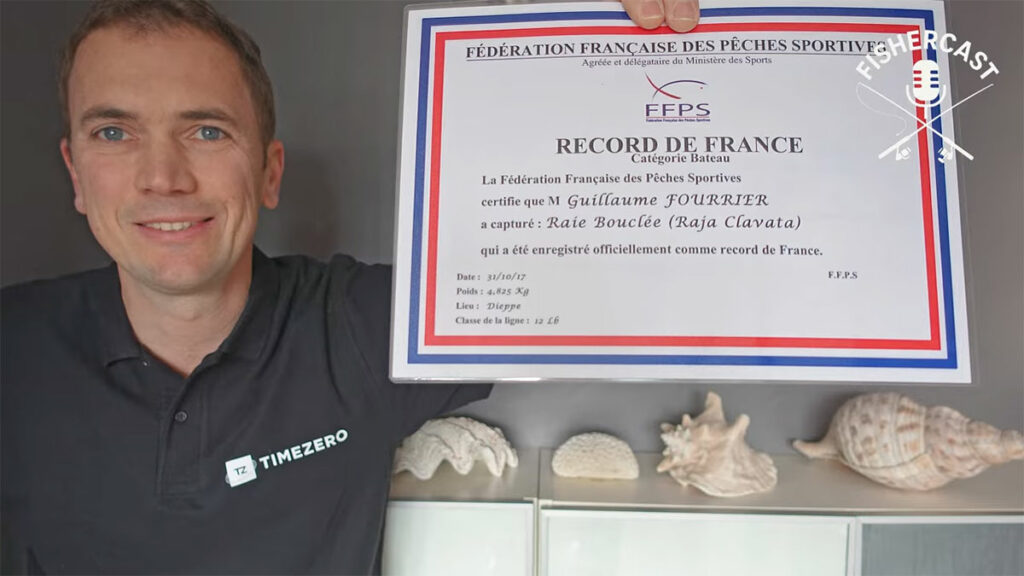
The discovery that one of his catches qualified for an official record marked an important turning point. After landing an exceptional fish, a local fishing tackle retailer explained the procedures required for official recognition, including certified weighing, preparing the necessary documentation and obtaining approval from the relevant fishing organisations. This first record gave a new dimension to his pursuit of trophy fish. Since then, targeting exceptional specimens has become one of the defining features of his fishing career, supported by a simple conviction: catching one large fish may involve luck, but consistently catching exceptional specimens requires observation, knowledge and experience.
Understanding tides to target trophy sea bass
During the interview, Guillaume shares several practical techniques for increasing the chances of catching large fish. When targeting European sea bass, he pays particular attention to tidal coefficients and changes in current strength. On his fishing grounds, increasing tidal coefficients above 65 can provide favourable conditions, particularly when the current begins to build after slack water. Small crustaceans and baitfish then become more exposed to predators, potentially triggering a period of intense feeding activity among larger sea bass.
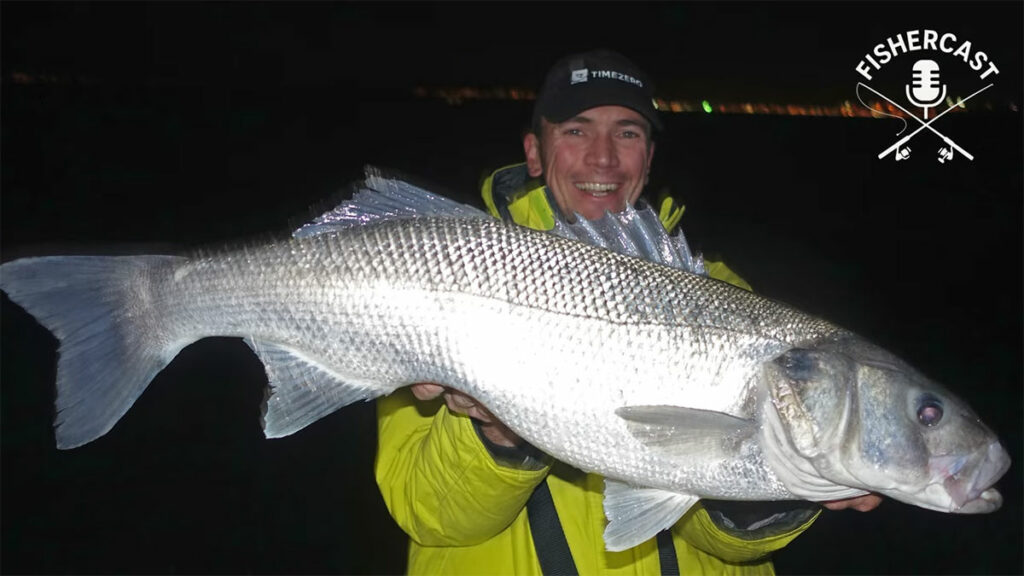
These feeding opportunities can be remarkably brief. Guillaume describes periods lasting approximately 30 minutes when the chances of encountering a trophy fish may increase significantly. However, he emphasises that this is not an absolute rule, as every fishing ground has its own characteristics and observations accumulated over many trips remain essential. The beginning or end of a tidal current can therefore represent a particularly productive moment, provided the angler understands where the fish are holding and how their prey moves with the water.
The biggest fish are not always in the middle of the feeding activity
When a wreck holds numerous small or medium-sized sea bass, Guillaume recommends looking beyond the structure itself rather than concentrating exclusively on the main concentration of fish. Extending a drift well downstream of the wreck, sometimes by as much as 100 metres, can prove particularly rewarding. Larger specimens may remain away from the main shoal, positioning themselves where the current carries disorientated prey. These experienced predators can take advantage of an easy meal without necessarily joining the intense feeding activity closer to the wreck.
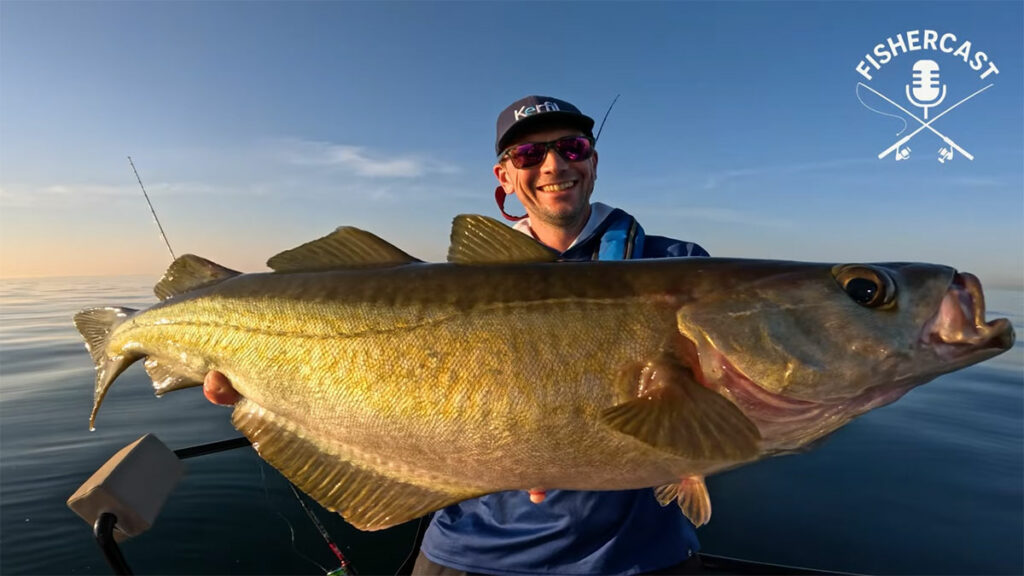
This observation demonstrates why a productive fishing spot should never be defined solely by the structure visible on a fishfinder. Tidal currents, prey movements and predator behaviour also determine where the most interesting opportunities may occur. For Guillaume, understanding these interactions makes it possible to explore a much wider area and improve the chances of encountering the largest specimens.
Shore fishing: casting further is not always better
Guillaume also discusses targeting large European sea bass from harbour walls, breakwaters and rocky shorelines. Contrary to popular belief, the biggest fish are not necessarily found at long range. Using substantial natural baits, such as a large piece of squid or a whole mackerel, anglers can target exceptionally large sea bass surprisingly close to harbour structures. Some fish patrol water less than one metre deep, particularly at night, and several of Guillaume’s biggest shore-caught sea bass have taken baits almost directly beneath his feet.
For Guillaume, casting distance should always be part of a deliberate fishing strategy. It is often better to begin by fishing close to the shore and gradually increase the distance when conditions justify doing so. A fresh bait, carefully presented and positioned where fish are likely to feed, can be far more effective than an impressive long-distance cast made without a clear purpose. This approach reflects his belief that observation and an understanding of the marine environment should remain at the heart of successful fishing.
Meticulous preparation to maximise every fishing trip
Targeting trophy fish is not simply a matter of luck. Guillaume Fourrier devotes considerable time to analysing conditions before every outing. Weather forecasts, wind strength and direction, tidal coefficients, currents and water clarity all influence his decisions. He also examines satellite data, including chlorophyll concentrations, to better understand the environmental conditions that may favour the presence of food and attract fish to particular areas.
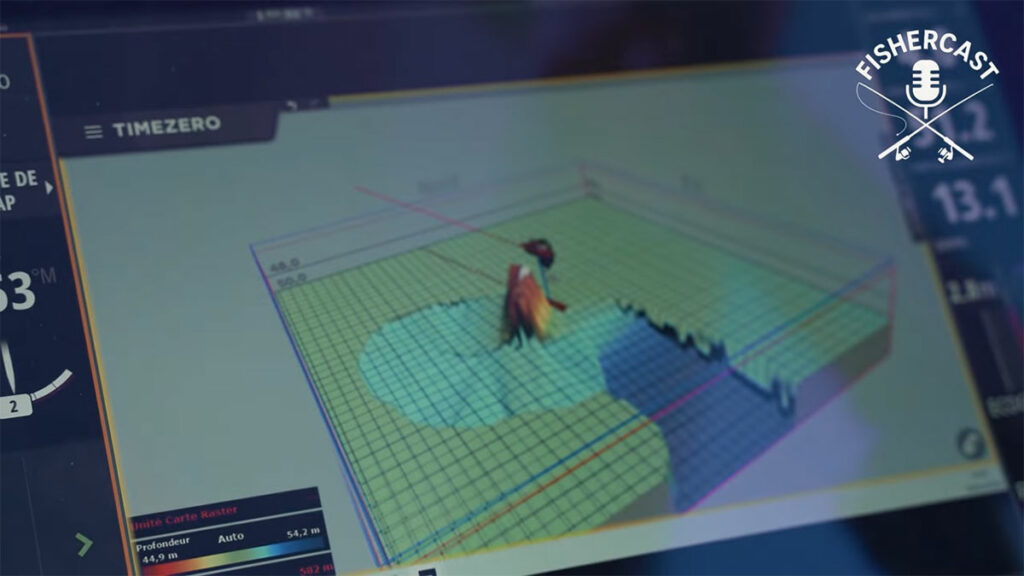
He combines this information with his knowledge of local fishing grounds and observations gathered during previous trips. His objective is to develop a carefully planned itinerary, selecting the most promising locations at the most productive stages of the tide. This preparation represents an essential part of his work as a professional guide. Although customers rarely see the hours spent analysing conditions beforehand, this research contributes directly to the quality of their experience and the consistency of fishing results.
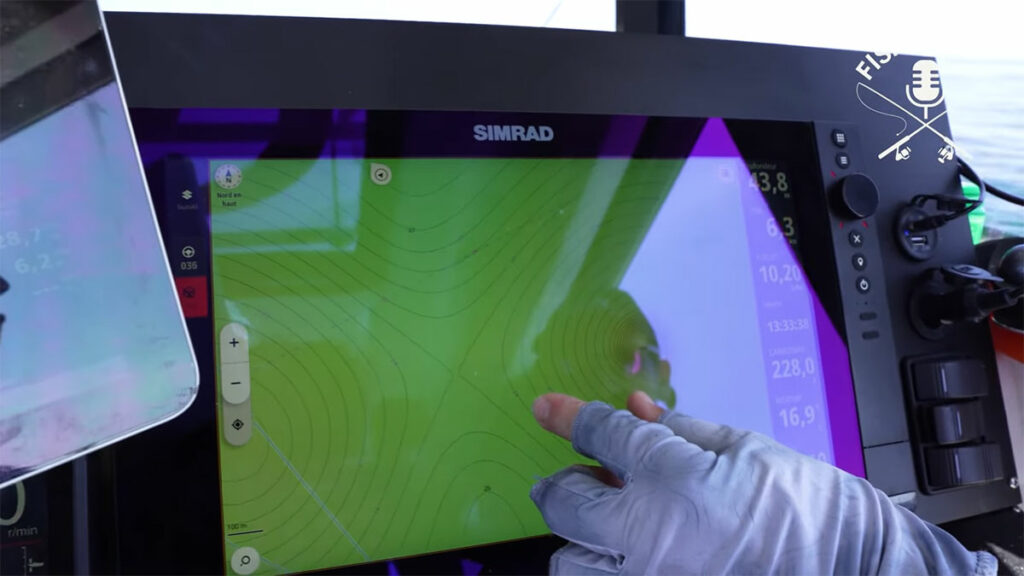
As the Fishercast interviewer points out, Guillaume combines an extremely technical, almost “geek-like” approach with an extensive understanding of fish behaviour. Modern tools help him refine his predictions, but they never replace experience gained at sea. Successful fishing depends on this combination of data analysis, knowledge of the marine environment and the ability to adapt quickly when conditions change.
A premium fishing boat designed for serious sport fishing
A substantial part of the interview focuses on Guillaume Fourrier’s boat, a Dromeas 28 SUV extensively equipped for his professional sea fishing activities. This cabin boat provides an exceptional level of comfort, with a sheltered interior, effective sound insulation, a refrigerator, fresh water and hot water. Its layout also meets the demands of full-day fishing trips, with numerous rod holders, generous working space, livewells and reinforced safety equipment. Every detail has been considered to improve navigation and fishing conditions while allowing customers to enjoy their time on board.
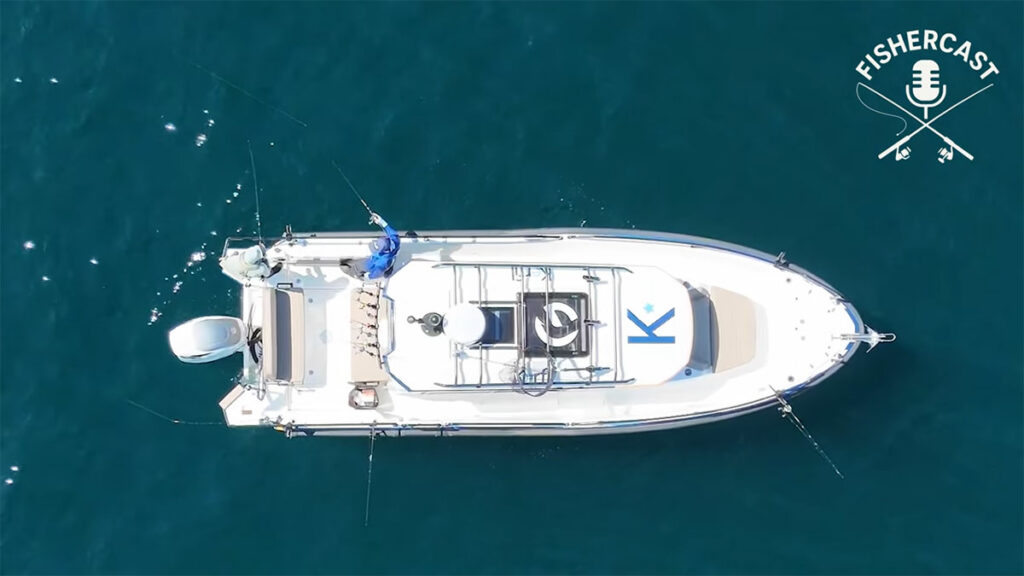
Guillaume explains that he has devoted considerable time to selecting and installing equipment suited to his fishing methods. The boat features an extensive Simrad marine electronics installation, combining several multifunction displays with different sonar technologies. These systems allow him to analyse the seabed, locate underwater structures and identify concentrations of fish. He also discusses the Zipwake automatic trim control system, the bow thruster and other equipment designed to improve comfort, handling and safety at sea.
The Simrad RECON trolling motor: an essential tool for professional guiding
Among the equipment presented, the Simrad RECON electric trolling motor plays a particularly important role. Mounted at the bow, it allows the boat to maintain a precise position using its virtual anchoring function, without deploying a conventional anchor. Guillaume uses it daily, particularly when fishing vertically for black seabream, rays and smooth-hound sharks. This technology makes it possible to remain directly above a productive fishing area, reduce unnecessary manoeuvres and devote more attention to the anglers on board.
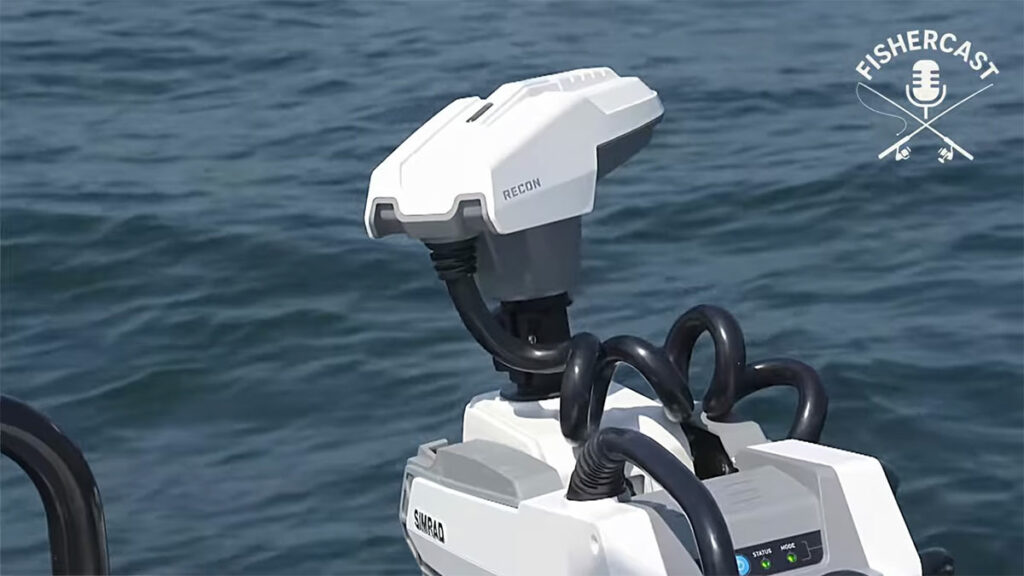
The guide can therefore explain techniques, assist beginners and help land fish while keeping the boat in position. He also occasionally uses the motor to counteract the influence of the wind, allowing the boat to drift naturally with the tidal current. Despite his boat weighing approximately four tonnes, Guillaume highlights the impressive performance and battery life of the electric motor. The interview demonstrates how modern marine technology can improve both fishing efficiency and the quality of the experience provided to customers.
Unforgettable fishing memories shared with clients
Towards the end of the interview, Fishercast invites Guillaume Fourrier to share some of his most memorable fishing experiences. His first story concerns a guided trip with a family and their two children, fishing over a small wreck that was almost impossible to identify on the fishfinder. The first drift produces no results, and Guillaume is preparing to move to another location when one of the children hooks a 65 cm European sea bass while retrieving the line. This unexpected catch immediately changes the plan, prompting another drift that confirms the presence of several large fish.
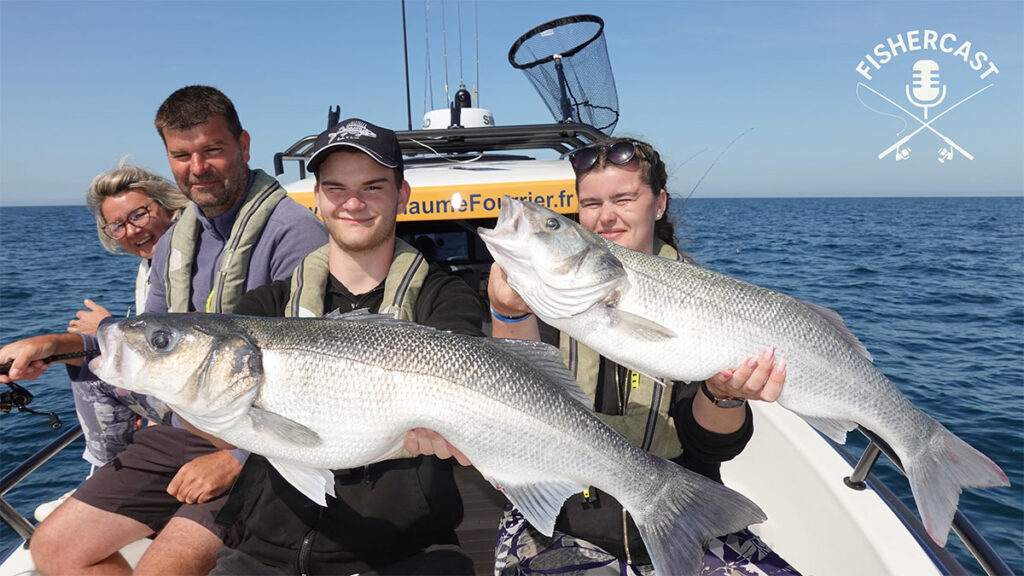
The average size of the sea bass caught that day reaches approximately 65 cm, transforming what was intended to be a brief exploratory stop into an unforgettable fishing session. The story illustrates something Guillaume knows particularly well: even with meticulous preparation, the sea always retains an element of unpredictability. Recognising an unexpected opportunity, interpreting an isolated catch and adapting the day’s programme accordingly are also essential skills for an experienced fishing guide.
Smooth-hound fishing beneath the cliffs of the Alabaster Coast
The second memory concerns the filming of a documentary for the French television channel Seasons. After several filming sessions targeting different species, one sequence still needed to be completed: catching smooth-hound sharks. Guillaume heads out with a friend and fishes beneath the spectacular white cliffs of Normandy’s Alabaster Coast, with beautiful light providing ideal filming conditions. The fish are present, and several smooth-hounds are caught, allowing the documentary to be completed successfully.
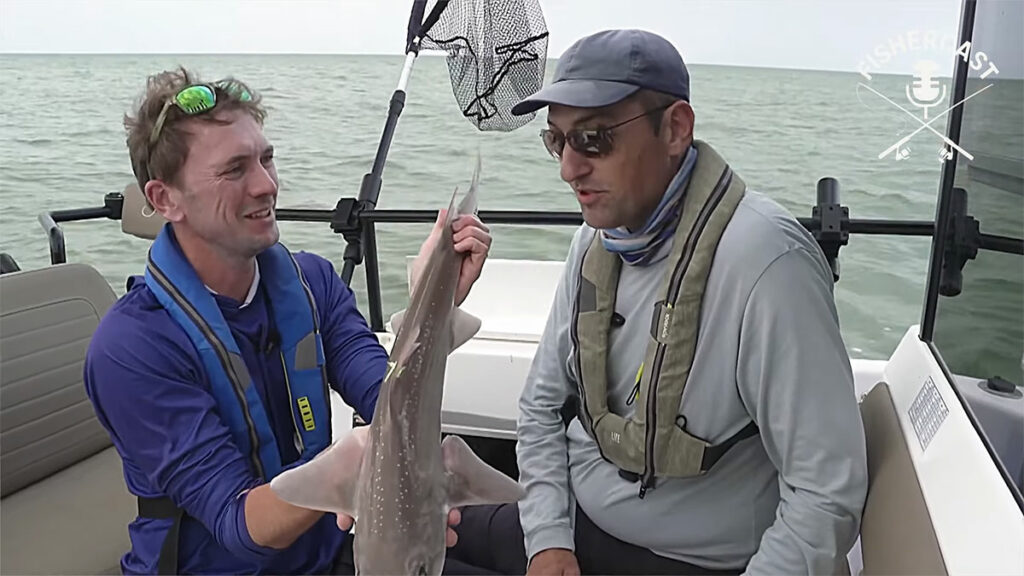
Beyond the catches themselves, Guillaume particularly remembers the pleasure of enjoying a personal fishing trip with a close friend. His professional life usually revolves around helping other people catch fish, and he takes enormous satisfaction in his customers’ achievements and technical progress. He often experiences their excitement almost as if he had caught the fish himself. This particular outing gave him an opportunity to enjoy holding a fishing rod again, surrounded by spectacular scenery and with no objective other than sharing his passion.
Watch the complete Guillaume Fourrier interview on Fishercast
Throughout this 33-minute interview, Fishercast presents an in-depth portrait of Guillaume Fourrier, his 29 officially recognised fishing records and his work as a professional sea fishing guide. Viewers discover how he prepares his trips, the techniques he uses to target trophy fish and the advanced equipment installed on his boat in Dieppe, Normandy. Illustrated with photographs of exceptional catches and footage filmed at sea, the conversation also reveals the human side of professional fishing guidance: sharing knowledge, creating memorable experiences and helping every angler enjoy the excitement of catching fish.
Watch the complete interview with Guillaume Fourrier on the Fishercast YouTube channel.