
Where can you find black seabream? When is the best time to fish for them? Which baits and rigs should you use? ActuNautique interviewes Guillaume Fourrier, professional fishing guide, who shares five essential tips for successful seabream fishing. From reading nautical charts to mastering bait presentation, discover the techniques that can help you catch more of these powerful and surprisingly challenging fish.
Following an earlier video dedicated to sea bass fishing, ActuNautique journalist Nicolas returned to Dieppe to meet Guillaume Fourrier. This time, the objective was to understand how to catch seabream, a species highly appreciated by sea anglers for its fighting ability and sometimes unpredictable bites. Black seabream have an impressive strength-to-weight ratio. Even medium-sized specimens put up energetic fights, with rapid headshakes and sudden bursts of power. Larger fish, reaching 40 to 45 cm, provide particularly enjoyable sport on sensitive fishing tackle.
Unlike sea bass, which readily hunt live fish, black seabream mainly search for food close to the seabed. Their diet includes molluscs, marine worms, crustaceans and various remains of marine animals. Opportunistic feeders, they may also take advantage of fish scraps left behind after predators have attacked shoals of baitfish.
This varied diet explains why natural bait fishing remains the preferred method for targeting black seabream. However, success depends on finding productive fishing grounds, choosing the right moment and presenting a small bait correctly near the seabed.
1. Where to fish for seabream: look for seabeds rich in shellfish
The first challenge is locating the fish. Unlike sea bass or pollack, which are often associated with underwater structures, wrecks and changes in depth, black seabream can inhabit completely flat seabeds. These areas may show no remarkable features on a bathymetric chart.
To find seabream, Guillaume Fourrier therefore recommends paying more attention to seabed composition than underwater relief. Nautical charts contain information that helps anglers identify sandy, gravelly and shell-covered areas. These details are particularly useful when searching for feeding grounds.
Understanding seabed symbols on nautical charts
Nautical charts use abbreviations to describe seabed composition. The letter “S” indicates sand, while “bkSh” refers to broken shells. Areas containing gravel, coarse sand and shell fragments deserve particular attention.
Slipper limpet beds, mussel beds and other shellfish-rich areas provide excellent fishing grounds. Seabream find molluscs and numerous small organisms in these environments. Transitions between sand and rock can also be productive when they support abundant marine life.
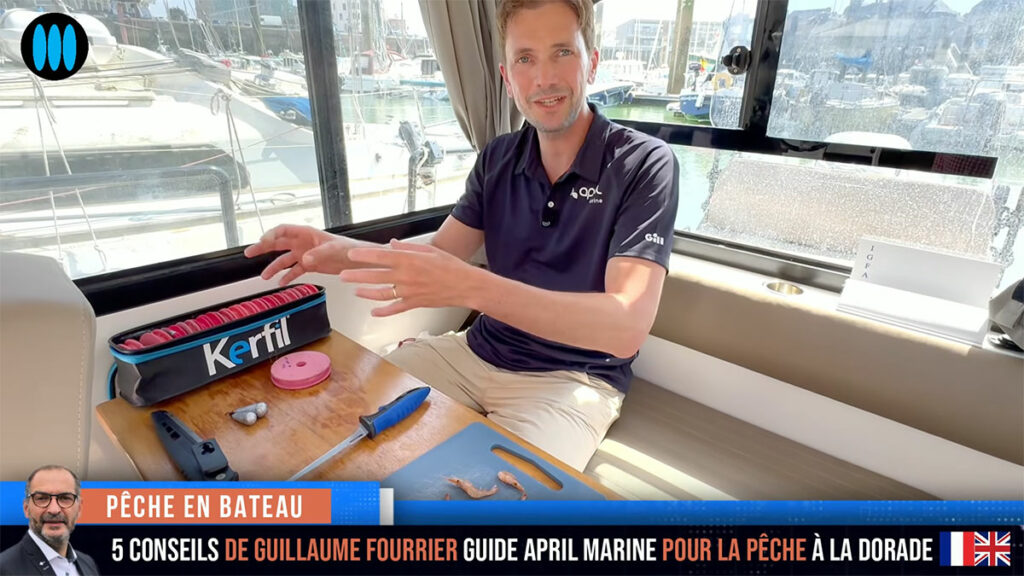
It is therefore unnecessary to concentrate exclusively on wrecks or dramatic underwater features. A flat plateau covered with gravel and broken shells may hold large numbers of seabream without displaying any obvious change in depth.
The same approach can help anglers locate other bottom-feeding species, including lesser-spotted dogfish and certain rays, which frequent similar habitats.
Guillaume Fourrier’s advice: When searching for black seabream, start by studying the seabed composition shown on your nautical chart. A shellfish bed is often a more useful indicator than a wreck or an underwater drop-off.
2. When is the best time to fish for seabream? Understanding slack water
Choosing the right moment is just as important as finding the right location. Black seabream can be caught in moving water, but the most favourable conditions depend on the size of the fishing area and the technique being used.
Guillaume Fourrier distinguishes between two situations: fishing a small, precisely located spot and drifting across a large seabed plateau.
On small fishing spots, wait for slack water
When targeting seabream around a rock, wreck or small shellfish bed, Guillaume prefers slack water, when the tidal current slows down and eventually stops before reversing direction.
This period makes it easier to present bait accurately over a specific area. The angler can remain directly above the fishing spot and keep the rig close to the seabed without being affected by a strong drift.
However, it is important not to confuse slack water with high or low tide. Depending on local tidal conditions, the current may continue flowing for one and a half to two hours after high or low tide.
Consider a practical example. If low tide is predicted for 10 am, the ebb current may continue flowing until approximately midday. Although the water level has already started rising, the current has not yet reversed. On this particular stretch of coastline, the best time to fish at slack water may therefore be around midday rather than 10 am.
This difference is partly explained by the inertia of moving water masses. The delay varies between locations and should not be treated as a universal rule. Anglers should therefore consult tidal current information rather than relying exclusively on high and low tide times.
On large plateaus, take advantage of neap tides
The approach changes when fishing a large plateau covered with coarse sand, gravel or shell fragments. These areas may extend for hundreds of metres or even several kilometres, allowing anglers to search for seabream while drifting.
The boat moves with the tidal current while the fishing rig remains in contact with the seabed. This technique makes it possible to cover a large area and locate fish scattered across the plateau.
Guillaume Fourrier prefers smaller tidal ranges, particularly during neap tides, for this type of fishing. When the current remains moderate, controlling the drift and keeping the sinker close to the seabed becomes much easier. Stronger currents can make bait presentation difficult and move the rig too quickly across the fishing ground.
Guillaume’s advice: Choose slack water when fishing a small, precisely located spot. On extensive shellfish and gravel plateaus, drifting during neap tides allows you to cover much larger areas effectively.
3. What are the best baits for black seabream?
Black seabream have a particularly varied diet. They feed on marine worms, crustaceans, molluscs, cephalopods and pieces of fish. This means anglers can use a wide range of natural baits without necessarily searching for expensive or difficult-to-obtain species.
During the interview, Guillaume Fourrier demonstrates several readily available baits: mackerel, prawns, shellfish and cephalopods. All can produce excellent results, provided anglers follow one essential rule: offer a small mouthful suited to the seabream’s relatively small mouth.
Mackerel: an inexpensive and easy-to-prepare bait
Mackerel is an excellent bait for targeting black seabream. It is readily available and allows anglers to prepare numerous hookbaits from a single fish. Guillaume begins by cutting a steak from the mackerel, then removes a small piece of fillet and takes out the bones. He cuts the flesh into small cubes approximately 1 to 1.5 cm across, compact enough to fit on a relatively small hook.
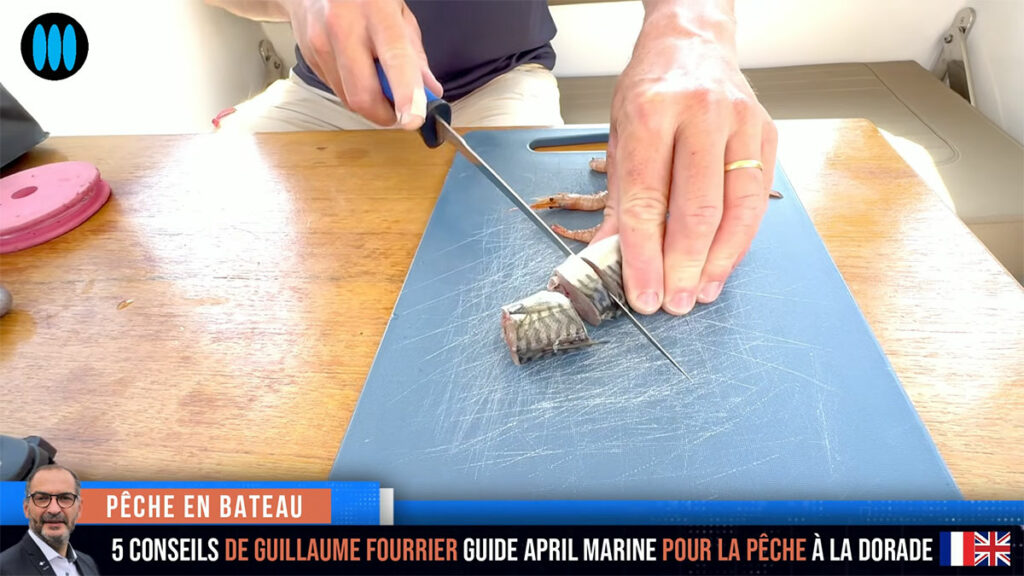
Bait size is crucial. If the piece is too large, a seabream may grab one end and nibble at it without reaching the hook. The angler then experiences repeated bites but struggles to hook the fish. A single mackerel can provide around ten hookbaits, sometimes more depending on the fish’s size and the pieces used. This makes mackerel a particularly economical and effective option.
Prawns: a versatile bait for different seabream species
Large coastal prawns, known in France as bouquets, are another excellent choice. Guillaume Fourrier sometimes uses lightly cooked prawns because their flesh holds more securely on the hook. Preparation is straightforward. Remove the head, keep the tail and thread the fleshy section onto the hook. The resulting bait is compact and well suited to the mouth size of black seabream.
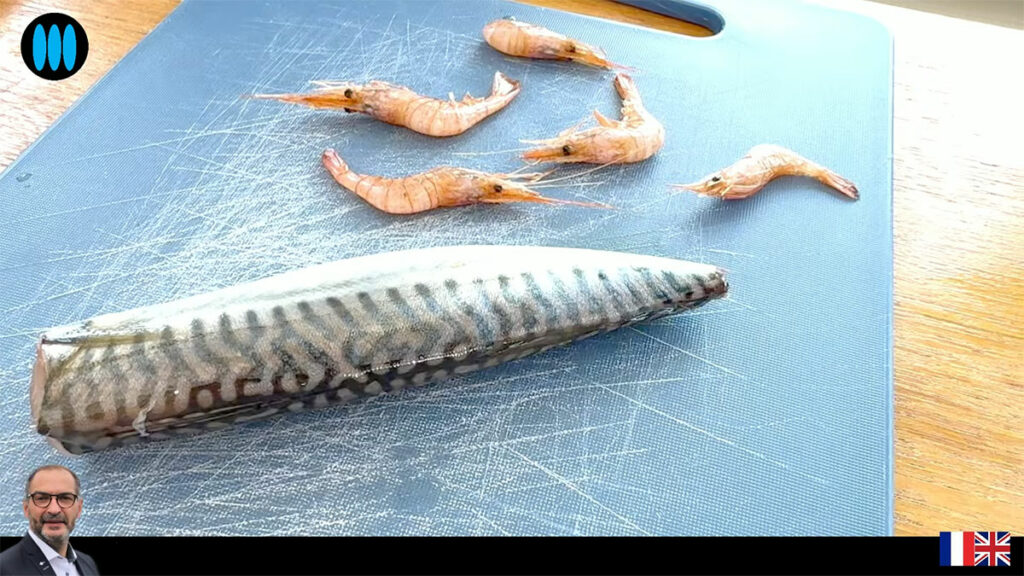
Prawns also offer an important advantage: they attract other members of the seabream family. Depending on the location, anglers may catch gilthead seabream, white seabream or smaller red porgies using the same bait. They are therefore particularly useful for anglers hoping to target several species during a single fishing trip.
Shellfish, marine worms and cephalopods
Cooked cockles, pieces of squid, cuttlefish or octopus are also effective. Lugworms and other marine worms provide further excellent bait options. The principle remains the same: prepare small portions and present them on a suitably fine hook. Pieces measuring approximately 1 to 1.5 cm provide a good starting point for black seabream, although bait size should be adjusted according to the fish being targeted.
Guillaume Fourrier also uses a practical method to prepare bait for future fishing trips. When a client catches a cuttlefish, he keeps part of the mantle and tentacles and cuts them into small portions. These are then vacuum-packed and stored for another fishing session. This approach provides a convenient supply of ready-prepared bait and saves valuable time when arriving at the fishing grounds.
Guillaume Fourrier’s advice: Use small hookbaits. An oversized piece allows seabream to nibble without getting hooked. With compact portions measuring around 1 to 1.5 cm, anglers can convert more bites into landed fish.
4. What is the best rig for black seabream fishing?
Black seabream have relatively small mouths and can be particularly cautious when taking bait. Hook choice and bait presentation therefore play an essential role in successful fishing. Guillaume Fourrier uses a simple rig consisting of a terminal sinker and a single hook positioned just above the seabed. This arrangement provides excellent sensitivity and keeps the bait close to the area where seabream naturally feed.
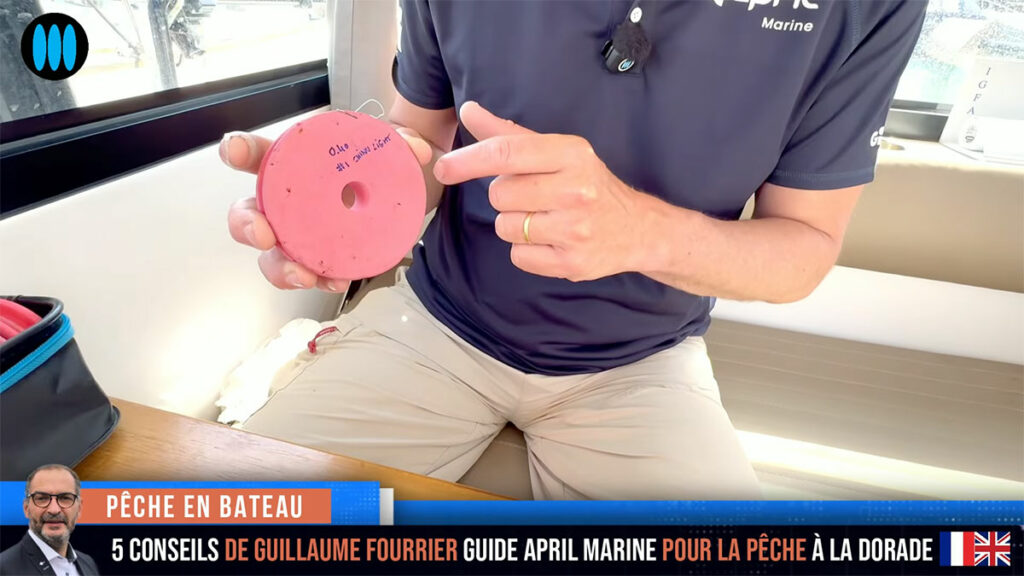
A 0.40 mm leader and a size 1 Chinu hook
The rig demonstrated in the video uses 0.40 mm monofilament for both the main rig body and the hook snood. Guillaume prefers a size 1 Chinu light hook, whose rounded shape and fine wire are particularly well suited to black seabream fishing.
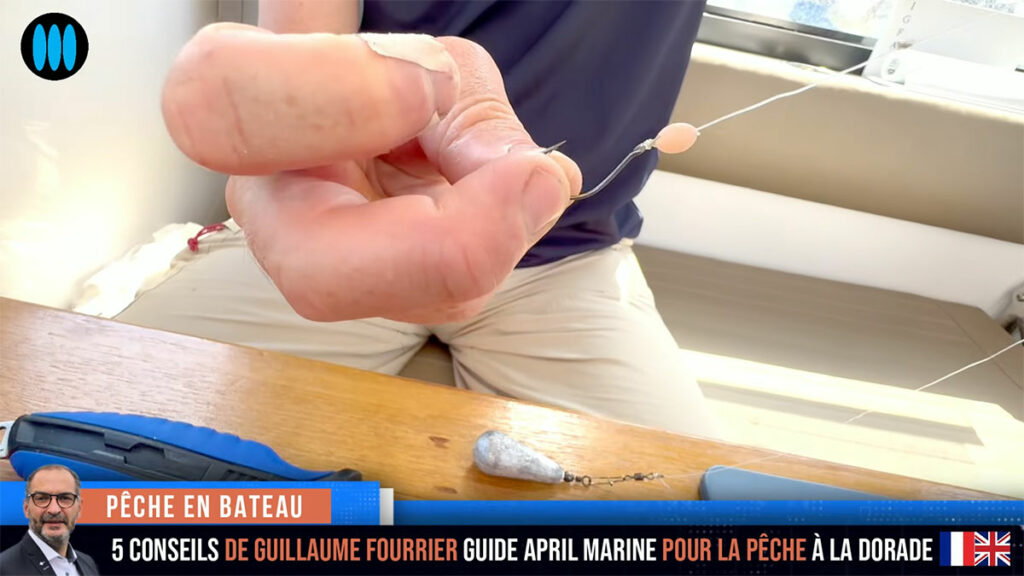
The hook’s fine wire is essential. Seabream often produce rapid, subtle bites. A thick or insufficiently sharp hook may result in numerous missed fish. By contrast, a fine-wire, razor-sharp hook penetrates more easily when a fish takes the bait. Based on his experience, this detail can dramatically improve catch rates. He has sometimes observed up to four times as many fish caught using a fine, sharp hook compared with a thicker, less effective model.
An 80 g sinker and bait positioned close to the seabed
For most of his fishing trips, Guillaume uses an 80 g sinker. This weight suits approximately 95% of the situations encountered on his usual fishing grounds. However, he may increase the weight to 130 g when currents become stronger or when conditions require the rig to remain more securely in position.
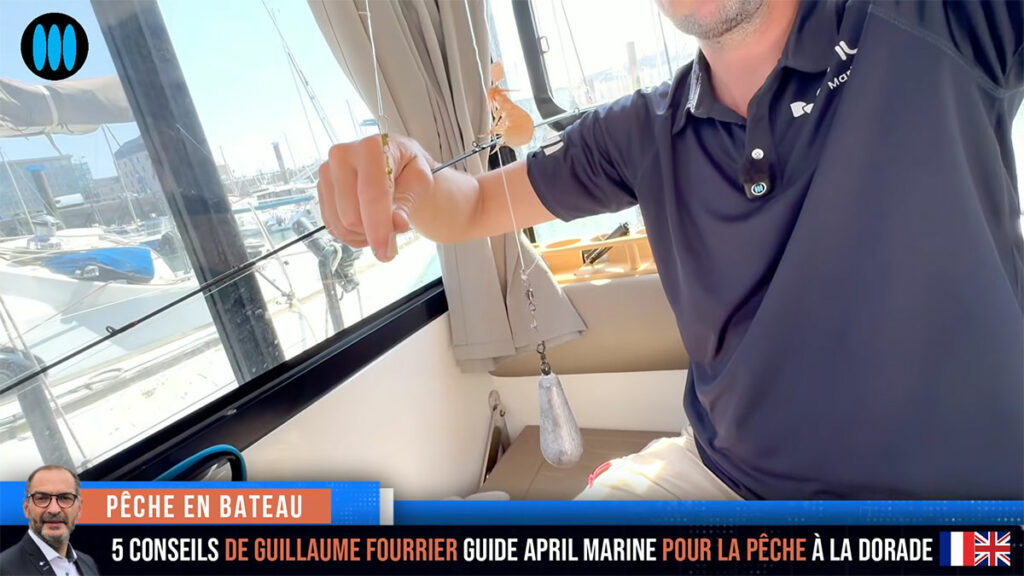
The hook is positioned approximately 5 cm above the sinker. This arrangement allows the bait to move just above the seabed, where seabream naturally search for food. When the boat drifts, the sinker can scrape across sand or gravel while the bait remains immediately above the bottom. This presentation increases the chances of attracting fish feeding close to the seabed.
A small luminous bead to attract attention
Guillaume sometimes adds a small pink glow-in-the-dark bead near the hook. This accessory is not essential, but it may provide an additional visual attraction. The bead produces a faint glow that can resemble natural light emitted by certain marine organisms, including some cephalopods and marine worms.
Nevertheless, the most important factors remain bait quality and presentation. The bead is an optional addition rather than an essential part of the rig.
Why use only one hook?
Many seabream rigs feature two or three hooks. Guillaume Fourrier now prefers using just one. This decision comes from his experience targeting larger fish. On certain fishing grounds, black seabream regularly reach 38 to 40 cm. When two large fish are hooked simultaneously on the same rig, their opposing headshakes can occasionally cause the line to break. Using a single hook reduces this risk and gives the angler better control during the fight. The objective is not to catch several fish simultaneously, but to land good-sized specimens reliably.
Which rod and reel should you choose?
Rod choice completes the setup. Guillaume recommends a rod with a relatively soft tip, capable of absorbing the seabream’s rapid headshakes while remaining sensitive enough to detect subtle bites.
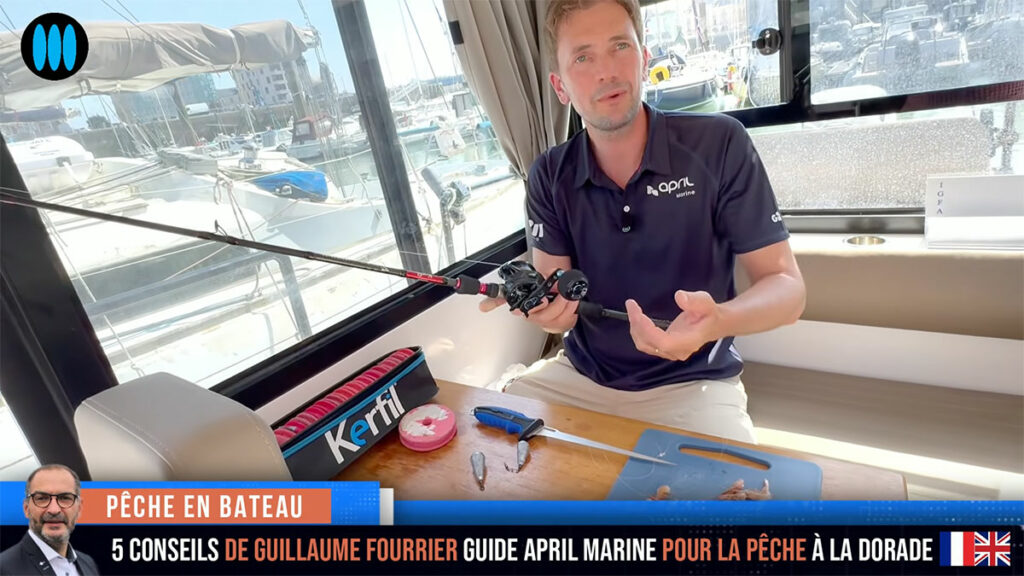
In the video, he uses a casting rod fitted with a baitcasting reel. This equipment is particularly suitable for vertical fishing. The angler can control the descent of the rig with their thumb and release or retrieve small amounts of line very quickly.
A rod designed to handle sinkers weighing approximately 20 to 150 g covers a wide range of situations. The most important feature is a sensitive, sufficiently flexible tip that can absorb the fish’s sudden movements. Guillaume also prepares his rigs in advance and stores them on rig winders. After each fishing trip, he rinses them in fresh water and allows them to dry before putting them away. This precaution prevents residual salt from gradually causing hooks to rust.
Guillaume’s advice: A simple rig with a razor-sharp size 1 Chinu light hook, 0.40 mm monofilament and an 80 g sinker provides an excellent starting point for black seabream fishing.
5. How to present your bait to catch more seabream
This is probably the most technical advice in the entire video. Once the right fishing spot has been identified and the rig correctly prepared, the way the bait is presented can make a significant difference. Guillaume Fourrier distinguishes between two methods, depending on whether the boat is drifting across a large plateau or holding position directly above a specific fishing spot.
These techniques rely on different principles. When drifting, the sinker should scrape along the seabed. When fishing vertically over a fixed position, the bait should be raised slowly to encourage seabream to follow and attack it.
When drifting: let the sinker scrape the seabed
On a large plateau covered with sand, gravel or shell fragments, the boat moves slowly with the tidal current. The angler lowers the rig until it reaches the bottom and maintains contact with the seabed. The sinker then scrapes across the sand and gravel. Contrary to what some anglers might expect, this movement does not necessarily frighten seabream. It may actually attract their attention.
As the sinker moves, it disturbs fine sediment and creates a small cloud close to the bottom. This activity can arouse the curiosity of nearby fish, while the scent released by the bait provides an additional attraction. The hookbait moves slowly through an area where seabream naturally search for food. The angler must pay attention to vibrations transmitted through the rod and regularly check that the rig is working correctly.
When the first bite occurs, Guillaume recommends remaining particularly alert. Seabream may begin by nibbling at the bait before taking it properly. When the next, more decisive bite arrives, the angler makes a sharp strike to set the hook. The resulting fights are usually very lively. A good black seabream may take a little line at first, then alternate between powerful headshakes and short bursts of speed. On a sensitive rod, these movements provide excellent sport.
When fishing vertically: raise the bait to trigger a strike
The second technique is used when the boat remains positioned over a specific fishing spot, such as a small shellfish bed or the edge of a wreck. Guillaume uses his electric trolling motor and its virtual anchoring function to hold the boat directly above the target area. The angler then lowers the rig vertically until the sinker reaches the seabed.
Once the sinker touches bottom, the angler begins retrieving the line extremely slowly, without jerking the rod. The bait gradually rises through the water, resembling a small prey item attempting to escape. Seabream may follow this moving bait for several metres. Guillaume has sometimes observed fish rising as much as five metres above the seabed to take the bait.
This technique is also useful around wrecks where poor cod are abundant. By gradually lifting the bait away from the bottom, anglers can move beyond the area occupied by these bottom-dwelling fish while continuing to attract seabream.
Why should you avoid striking at the first bite?
This is where the technique becomes particularly interesting. When a seabream begins nibbling at the bait during the retrieve, Guillaume recommends resisting the temptation to strike immediately. Instead, the angler should continue winding very slowly, as though nothing has happened. The bait keeps rising, forcing the seabream to follow if it wants to seize the opportunity to feed.
This presentation can provoke a more aggressive response. The fish attempts to catch a tempting mouthful that appears to be escaping. When several seabream follow the same bait, competition between them can increase their determination to attack. The bites then become more decisive. The angler waits until a stronger pull indicates that the fish has properly taken the bait before setting the hook.
This method requires anglers to overcome the natural reflex of lifting the rod as soon as they feel a bite. Guillaume has even noticed that beginners sometimes perform this technique better than experienced anglers, who are accustomed to striking immediately.
Guillaume Fourrier’s advice: When drifting, let the sinker scrape the seabed to attract fish. When fishing vertically, retrieve the bait extremely slowly. If a seabream begins nibbling, keep winding without striking. Wait for a stronger bite before reacting.
How to combine seabream and sea bass fishing during the same trip
One of the advantages of understanding tidal currents is the ability to target several species during a single day at sea.
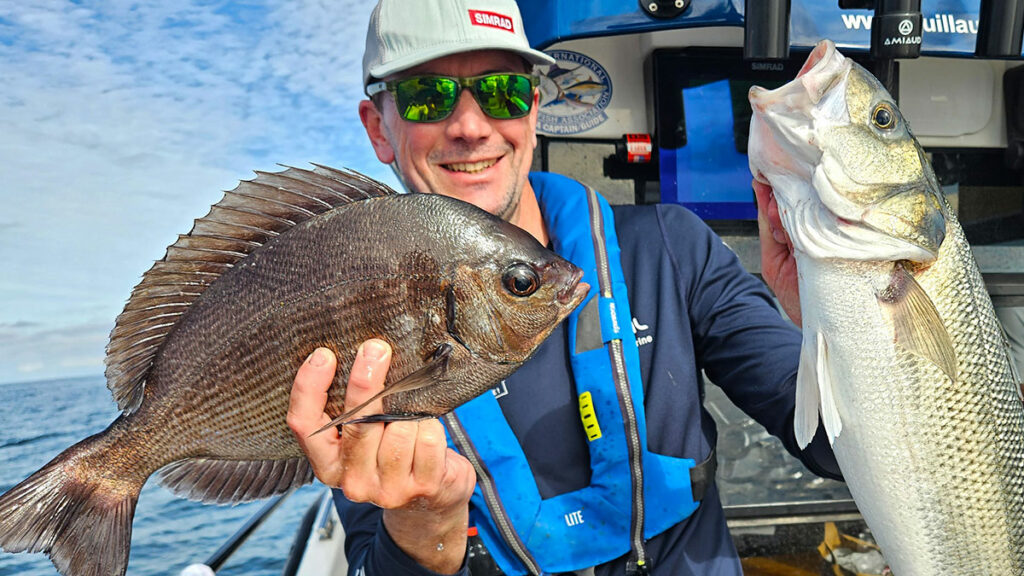
Black seabream and sea bass do not necessarily feed most actively at the same time. Guillaume Fourrier takes advantage of this difference when planning his guided fishing trips. As the current slows and eventually stops, he may spend part of the session targeting black seabream over gravel and shellfish beds. These conditions are particularly suitable for vertical bait fishing over precisely located spots.
The duration of this period depends partly on the tidal range. During neap tides, slack-water conditions may allow nearly two hours of productive fishing. During spring tides, this window can shrink to little more than half an hour. When the current begins flowing again, Guillaume can move to another area and target sea bass with soft plastic lures around rocks, underwater drop-offs or wrecks. These predators often become more active as the tidal current starts moving.
This approach allows anglers to take advantage of successive feeding periods for different species. Guillaume applies similar principles when targeting other fish, including rays and smooth-hounds, to provide varied fishing experiences for his clients. Rather than spending the entire day waiting for bites in one location, he adapts his movements and techniques to changing conditions.
Seabream fishing: five essential tips to improve your results
At first glance, black seabream fishing appears relatively straightforward. A natural bait, a sinker and a hook may seem sufficient to catch these fish. However, consistent results depend on several technical details that anglers sometimes overlook.
Seabed composition helps identify feeding grounds. Tidal currents determine the most favourable fishing periods. Bait size and hook sharpness directly influence the number of bites converted into catches. Finally, the correct bait presentation can trigger strikes from fish that initially appear reluctant to feed.
These five tips are based on Guillaume Fourrier’s extensive experience as a professional sea fishing guide. They provide beginners with a solid understanding of the fundamentals while offering experienced anglers practical ways to improve their results. Black seabream deserve their reputation as excellent sporting fish. Their fighting ability, willingness to take a wide variety of natural baits and the excitement of catching them make them particularly enjoyable to target.