
How can a production boat be transformed into a genuine sport fishing platform? One year after taking delivery of his boat, Guillaume Fourrier presents the many modifications he has made. The professional fishing guide based in Dieppe has transformed his boat with numerous custom modifications. These improvements enhance fishing efficiency, safety and comfort on board. In a 30-minute documentary released by ActuNautique in summer 2026, he shares his experience after nearly 500 hours at sea in the English Channel.
A successful fishing boat setup involves much more than installing a few rod holders and a fishfinder. Indeed, some dealers describe a boat as a fishing boat simply because it has four rod holders. A genuine fishing boat requires careful consideration of deck layout, anglers’ movements around the boat, helm ergonomics and the use of marine electronics. Every detail must serve a practical purpose, particularly when the boat is a professional working tool, as it is for Guillaume Fourrier.
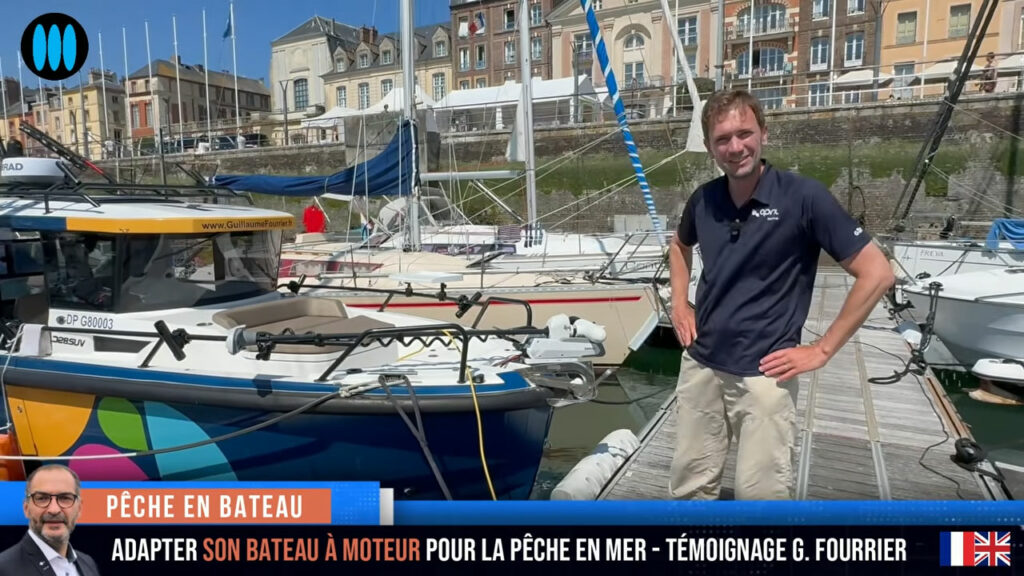
After a first season of guiding and several months of work, Guillaume Fourrier’s boat reflects this approach. From Simrad electronics to the aft platforms converted into fishing stations, the modifications have been designed to optimise the available fishing space.
A fishing boat optimised after 500 hours at sea
When Guillaume Fourrier took delivery of his 8.50-metre pilothouse boat, he immediately began customising it. Extended guardrails, a custom-built livewell integrated into the side of the hull, 16 rod holders, marine electronics with radar, four displays and an electric trolling motor: now that’s a genuine fishing boat! The boat therefore offers several advantages for sea fishing. Its robust, foam-filled double hull, enclosed wheelhouse and walkaround side decks make offshore navigation possible in comfortable conditions. Guillaume did not have enough time to complete everything at once. He carried out the essential work first and then used a full season of operation to confirm what further improvements could be made.
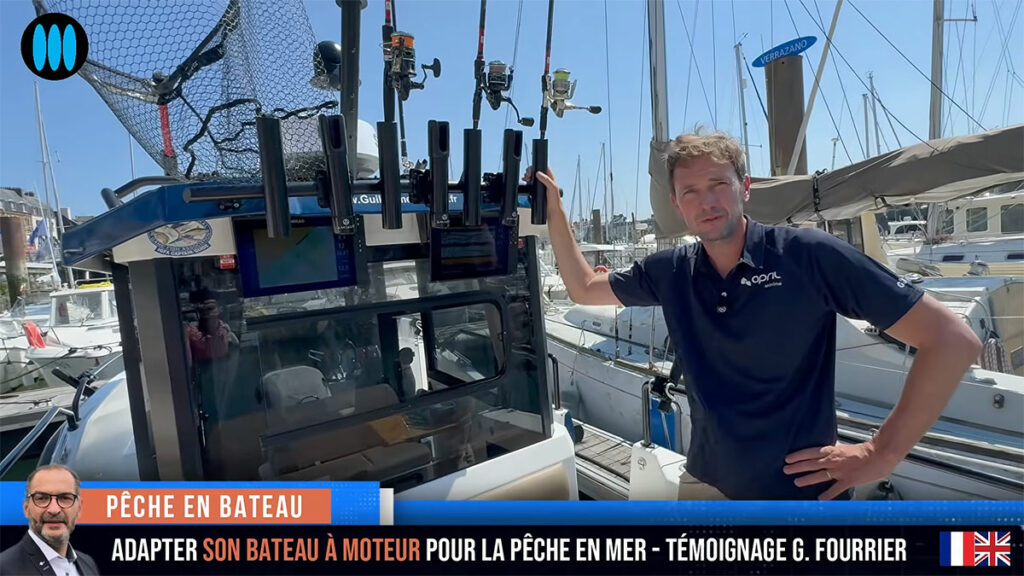
The Normandy-based guide then took advantage of the winter to make substantial changes to the boat’s layout. His objective was not to multiply the equipment, but to make movement around the boat easier, improve the safety of the fishing stations and increase efficiency during trips with his clients. By August 2026, the engine-hour counter was approaching 500 hours. This experience provides an opportunity to assess the modifications made and evaluate the advantages of the new boat compared with his previous pilothouse boat, a Beneteau Barracuda 7.
Marine electronics: a Simrad network designed for fishing
The electronics installation is one of the most impressive features of the boat. Guillaume Fourrier uses three Simrad multifunction displays and a PC, distributed between the interior helm station and the aft cockpit. This configuration keeps essential information within sight, whether he is navigating or assisting his clients while fishing.
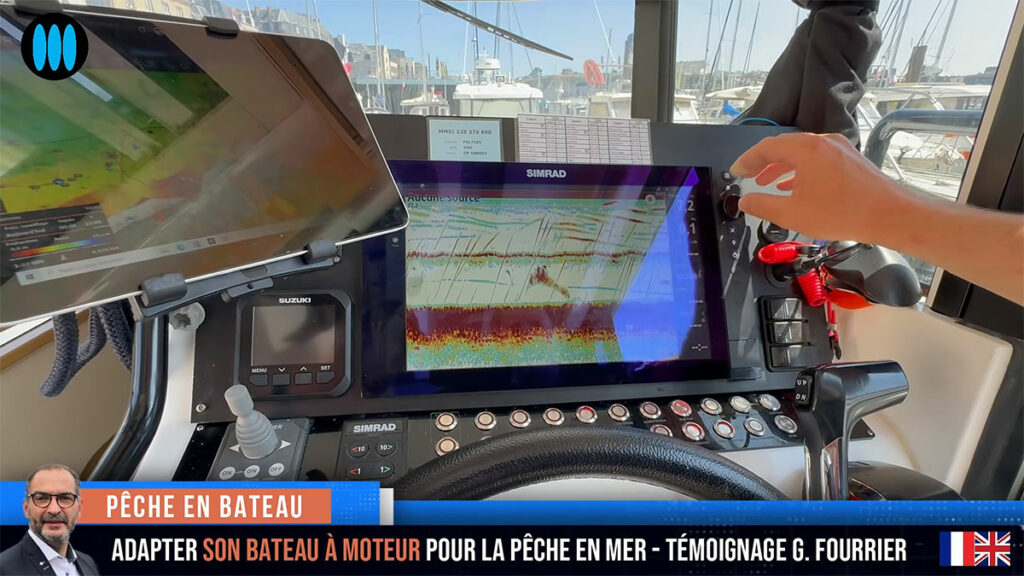
Inside the wheelhouse, a 16-inch Simrad NSS4 display brings together chartplotting, fishfinder and radar information. The guide also has a computer running TimeZero Professional navigation software. He uses it to prepare his fishing trips by combining his knowledge of fishing grounds with currents, satellite data and available environmental information. This preparation allows him to establish a fishing programme according to the expected conditions. Once on site, fishfinder information helps confirm the presence of fish and adapt the fishing strategy.
Radar also plays an important role. Beyond navigation safety, it can help detect gatherings of seabirds offshore. These concentrations sometimes indicate feeding activity involving baitfish and predators such as European seabass or Atlantic bluefin tuna. It has helped him locate some impressive bluefin tuna feeding frenzies off Dieppe since 2024. It is extremely effective! At the stern, two additional displays provide access to fishfinder information, electronic charts and TimeZero software.
Guillaume Fourrier also presents a live sonar transducer installed on a removable Railblaza HEXX Live Pole 60.
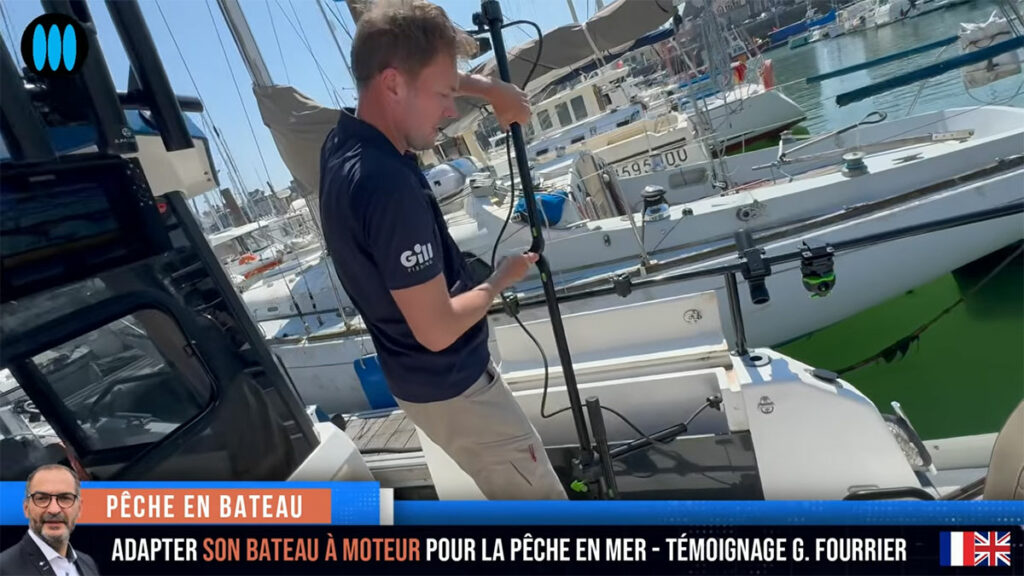
This technology, known as live sonar, makes it possible to observe fish movements and follow the presentation of a lure through the water column in real time. A little-known tip: the Lowrance ActiveTarget 2 live sonar system is compatible with the Simrad NSS3 fishfinder. This is a truly comprehensive and sophisticated installation using the latest technologies.
The Simrad RECON electric trolling motor: a virtual anchor
Among the most useful pieces of equipment in everyday operation, Guillaume Fourrier presents his Simrad RECON electric trolling motor. Installed at the bow, it can automatically maintain the boat in a specific position using a virtual anchoring function. This is particularly useful when the tidal current slows down. Under these conditions, the guide can keep the boat positioned over a fishing ground without constantly operating the main engine.
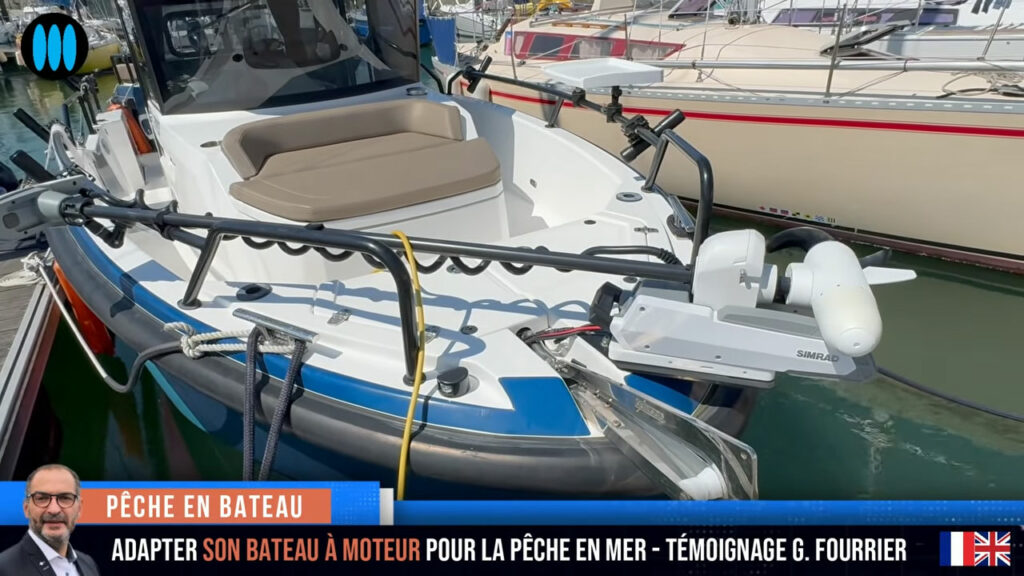
The RECON communicates with the Simrad electronics network. Guillaume Fourrier explains that he can select an area or a school of fish on his display and instruct the electric motor to hold the boat in position. This automation significantly improves the way fishing trips unfold. The guide can participate more actively in the fishing, advise his clients and monitor their rigs without spending as much time repositioning the boat.
A deck designed for sport fishing
The deck layout has been particularly carefully considered. Guillaume Fourrier has installed approximately 16 fixed rod holders around the boat, with additional removable Railblaza holders that can be attached to the handrails. Their positions and angles have been carefully selected to avoid obstructing movement along the side decks. Wherever an angler is fishing, there is always an accessible place to put down a rod. The guide also uses removable cutting boards mounted on Railblaza supports. They can be repositioned according to where the anglers are fishing. This flexibility makes it possible to prepare bait or fish without disturbing those who are fishing.
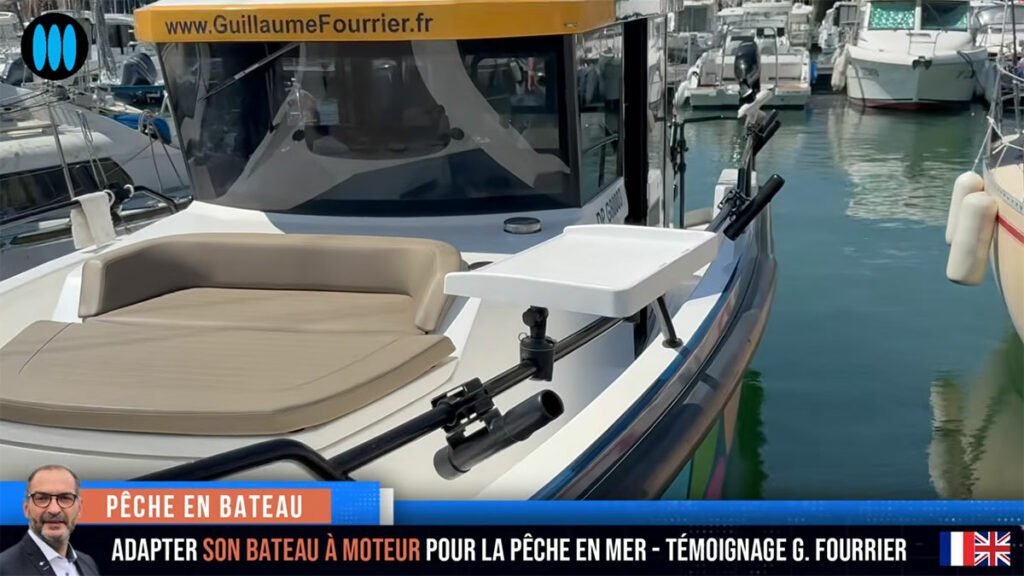
The roof rack accommodates other equipment, including additional rod holders, antennas and the landing net. However, Guillaume Fourrier has made sure to keep handholds clear to make movement easier and improve safety. The perimeter of the wheelhouse roof rack therefore remains unobstructed. At the stern, a bathing gate that originally folded down has been converted into a removable panel.
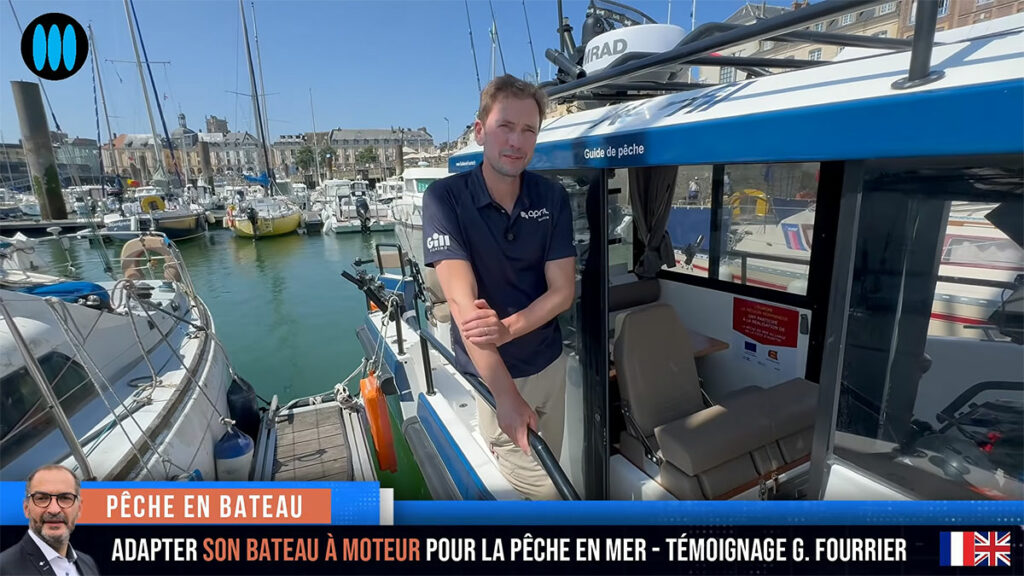
Guillaume replaced the hinge with a stainless-steel bracket. He cut a slot underneath the gate so that it could be fitted onto the bracket like a Lego piece. The cockpit gate can now be removed easily when welcoming clients on board. This modification opens up the passageway and makes boarding and disembarking easier in harbour, as well as facilitating the release of large fish such as Atlantic bluefin tuna.
Safe and comfortable aft fishing stations
The two bathing platforms of the pilothouse boat have been transformed into genuine fishing stations. Guillaume has equipped them with custom-made stainless-steel guardrails that follow the sides of the hull towards the engine. These protective rails surround anglers, allowing them to lean comfortably against them while fishing. These modifications provide additional safety during drifts and fish fights. They also create two new fishing positions that have become particularly popular on board.
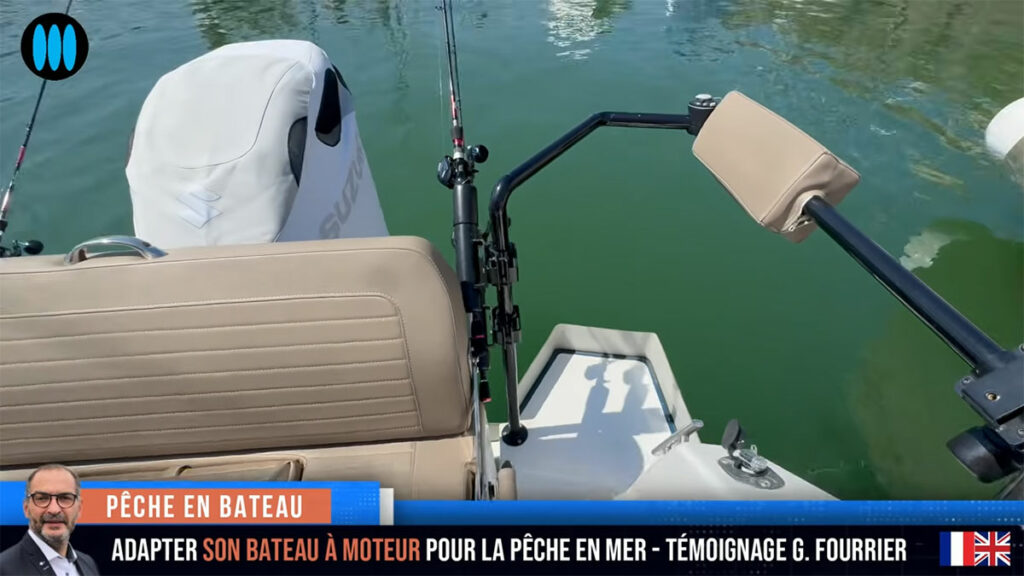
After noticing that anglers could receive splashes of water in certain sea conditions, Guillaume Fourrier also added transparent Plexiglas extensions, thermoformed to follow the shape of the platforms. According to his experience, these protections have reduced water entering the platforms by approximately 90%. The guide plans to remake them and increase their height this winter. A perfectionist and passionate angler, Guillaume Fourrier readily takes on the roles of electronics technician, marine carpenter and handyman to create custom-made solutions and optimise his boat down to the smallest detail.
Safety was also a major consideration behind the installation of these handrails extending around the entire boat. Every modification has been designed to maintain easy movement while providing accessible handholds.
Livewells and fish storage: making use of every available space
Optimising a fishing boat also involves equipment for keeping fish in good condition. Beneath the aft bench seat, Guillaume Fourrier has installed a livewell holding more than 100 litres in an area that was previously unused. Supplied by a continuously renewed flow of water, it keeps fish alive in good conditions. An access opening was created in the top of the livewell, while an upholsterer made a custom cut-out in the bench seat. Blue LED lighting connected to the boat’s courtesy lights adds an attractive finishing touch to the installation.
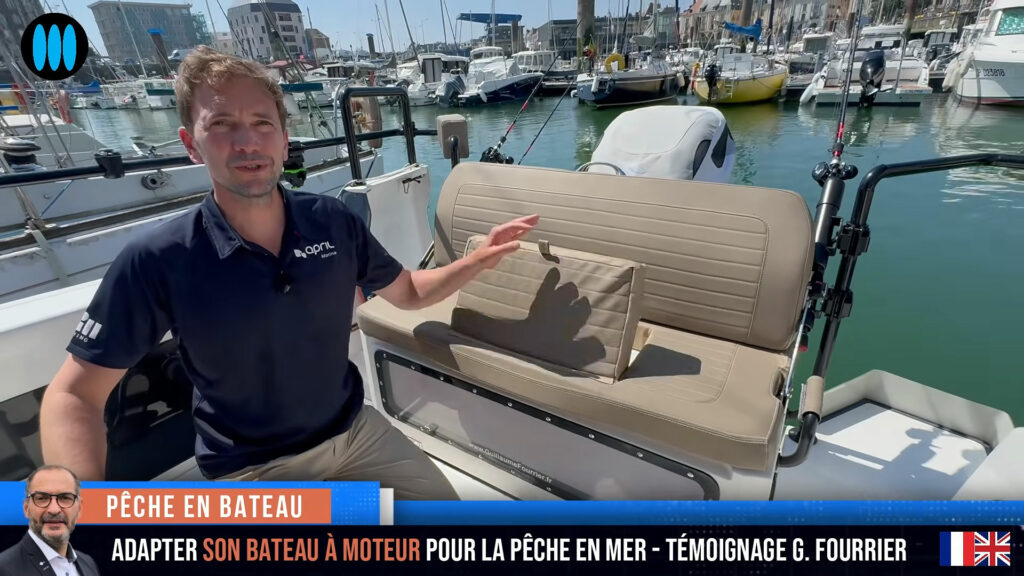
A second livewell, with an independent water circuit, provides additional capacity for small fish and live bait. Another storage compartment has been converted into a large insulated fish box. Guillaume Fourrier has improved its insulation and plans to install a refrigeration unit during the third phase of modifications next winter. This will provide approximately 160 litres of refrigerated storage space. These modifications serve different purposes: keeping live bait in good condition, preserving catches for catch-and-release fishing and providing suitable fish storage facilities during long days at sea.
Navigation: greater comfort and more time for fishing
After a year of operation, Guillaume Fourrier particularly emphasises the improvements in navigation comfort. Larger and heavier than his previous Barracuda 7, the boat handles choppy seas more comfortably. Its hull construction and insulation also help reduce noise and the impacts felt on board. Both the double hull and the entire wheelhouse incorporate foam insulation.
The fishing guide regularly cruises at speeds of 30 to 32 knots. This performance reduces the time needed to reach distant fishing grounds. On some trips, he saves approximately 15 minutes on the outward journey and another 15 minutes on the return. His clients greatly appreciate having an additional 30 minutes of fishing time.
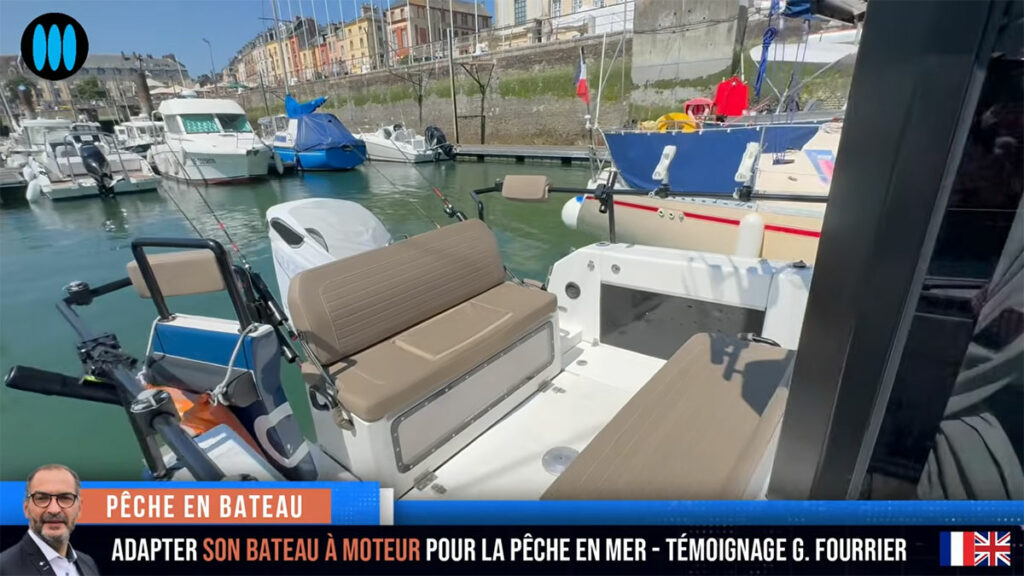
Guillaume Fourrier also highlights the effectiveness of the Zipwake system. These automatic interceptors help the boat get onto the plane more quickly and improve its handling, particularly when several passengers are seated at the stern. Comfort is not limited to navigation. The enclosed wheelhouse, proper toilet facilities, seating and coffee machine also contribute to the quality of the experience offered to clients.
A fishing boat supporting business growth
The results of this first year extend beyond technical performance. Guillaume Fourrier explains that his new boat has helped him expand his professional fishing guide business operating from Dieppe. Clients particularly appreciate the improved comfort on board and are returning more often. The boat also allows him to offer fishing trips for groups of up to five anglers.
However, this additional capacity requires careful organisation. The guide is committed to maintaining a personalised service and ensuring that every participant fully enjoys their day. For Guillaume Fourrier, the boat remains above all a professional working tool. Its equipment must improve the quality of his guiding, make fishing more efficient and preserve his clients’ comfort.
The modifications are far from finished. Additional lighting and several other improvements are already being considered. Guillaume’s next winter maintenance period promises to be another major technical project!
Discover the documentary about Guillaume’s fishing boat
In this episode of Pêche en Bateau, which you can watch at the top of this page, the ActuNautique journalist meets Guillaume Fourrier in Dieppe, one year after first presenting his new boat. Over approximately 30 minutes, the guide explains the modifications he has made and demonstrates their practical benefits in the real conditions of his professional activity.
From marine electronics to deck layout, the documentary offers plenty of inspiration for boat owners looking to optimise their own fishing vessels. Above all, it demonstrates that successful boat customisation comes from experience gained at sea. Every trip provides an opportunity to identify improvements that can make a boat safer, more comfortable and more efficient.